Brilliant White
 Clay
Clay
 Dove
Dove
 Duck Egg
 Ivory
Ivory
 Linen
Linen
 Mint
Mint
 Pebble
 Rhino
Rhino
 Sandstone
 Sky
Sky
 Apricot
 Aqua
Aqua
 Atlantic
 Blossom
 Forest
 Kiwi
Kiwi
 Lavender
 Marine
 Night
Night
 Olive
Olive
 Rosewood
 Sunflower
 White Gloss
 Ash
Ash
 Avocado
 Fuchsia Pink
 Grape
Grape
 Lagoon
 Lime
Lime
 Orange
 Plum
Plum
 Ruby
Ruby
 Slate
Slate
“Budget” cladding has an image problem. The word hints at a compromise — a thinner, cheaper sheet, made from lesser materials, that won’t last. In practice, choosing a budget option is usually about right-sizing the specification to the job: spending on the performance a room actually needs, and not a penny on performance it doesn’t.
Broadly, there are two ways to bring the cost of a hygienic wall down, and they suit two different kinds of project rather than two kinds of buyer — the same specifier might reach for either, depending on the room. This guide explains what each one is, what you keep, what you trade away, and how to choose between them.
One point applies to everything below: all of our PVC wall cladding is for internal use only. It has no meaningful UV resistance, so it isn’t suitable for outdoor walls — but indoors, every option here is fully waterproof regardless of thickness.
The two budget routes
There are two levers that bring the price of a hygienic sheet down: using less material, or using lighter material. Each gives you a distinct product.
- Route 1 — a thinner gauge of our standard solid sheet (1.5mm or 2mm). The same solid PVC, just less of it.
- Route 2 — a co-extruded sheet with a foamed PVC core and a thin solid skin. A different construction, engineered to be light and low-cost.
The diagram below shows how they differ at the cut edge.

That distinction decides what you keep. A thinner solid sheet keeps every credential of the full-thickness product; the co-extruded sheet trades some of them for a lower price. The rest of this guide unpacks both.
Route 1 — Thinner solid sheets (1.5mm & 2mm)
Our standard hygienic cladding is solid PVC, offered in 1.5mm, 2mm, 2.5mm and 3mm. The two thinner gauges are the quiet budget option that often gets overlooked — because dropping from 2.5mm to 1.5mm reduces the material cost without touching the specification at all.
What you keep:
- The full fire rating — Class 0 and Class 1 to BS 476 Parts 6 and 7.
- Food-contact approval to EU 10/2011, so it’s suitable for commercial kitchens and food-prep areas.
- High impact strength.
- The full palette — 35 satin and gloss colours.
- The manufacturer’s lifetime guarantee on the complete system.
What you give up:
- Rigidity and impact resistance fall with thickness. A 1.5mm sheet is more flexible, shows an uneven wall more readily, and benefits from a flat, well-prepared substrate and closer attention when fixing.
- Longevity under heavy abuse — thinner sheets are best kept to walls that won’t take constant knocks.
Best for: a cost-conscious specification that still has to meet a fire or hygiene standard — clinics, washrooms, kitchens, schools — on a flat, sound wall that isn’t a high-impact zone.
And here’s the part that surprises people: our 1.5mm solid sheet costs the same as the 2.5mm budget co-extruded sheet. At that price the choice isn’t really about money — it’s about what the wall needs. If it has to meet a fire or food standard, the 1.5 mm solid keeps all of that. If it doesn’t, the thicker, lighter co-extruded sheet (covered next) may suit better for the same spend.
Route 2 — Co-extruded foam-core (the “White Budget” sheet)
The co-extruded sheet is our lowest-cost route. Rather than solid PVC throughout, it combines a lightweight foamed PVC core with a 0.6 mm solid hygienic skin on the surface. That foamed core is the whole trick: it cuts weight and cost while keeping a smooth, wipe-clean face.
The numbers are striking at like-for-like thickness:

At 2.5 mm in an 8′×4′ sheet, the co-extruded panel is around a third cheaper than the solid equivalent and roughly half the weight — which also makes it noticeably easier to carry, cut and fix single-handed.
What you trade for that:
- Fire: rated Class 1 to BS 476 Part 7 and Euroclass B-s1,d0 (self-extinguishing) — a strong result — but it does not carry the Class 0 rating of the solid range.
- Food contact: it is not food-contact approved, so it shouldn’t be specified for food-preparation surfaces or anywhere that requires EU 10/2011.
- Durability: impact strength is Medium (32 J/m) rather than High, and the foamed core dents more easily than solid PVC.
- Choice: available in white only, in a satin finish.
Best for: white, lower-impact internal areas where those credentials aren’t required — garages, workshops, utility rooms and storerooms, temporary or short-term installations, and quick refurbishments or rental turnarounds where cost per square metre drives the decision.
Side by side
How the three specifications compare across the things that usually decide a project:
|
Thinner solid |
Co-extruded |
Standard solid |
|
|
Construction |
Solid PVC, thinner gauge |
Foam core + 0.6 mm solid skin |
Solid PVC |
|
Fire rating |
Class 0 & Class 1 |
Class 1 / B-s1,d0 |
Class 0 & Class 1 |
|
Food contact |
EU 10/2011 approved |
Not rated |
EU 10/2011 approved |
|
Impact strength |
High |
Medium (32 J/m) |
High |
|
Colours |
35 satin & gloss |
White only |
35 satin & gloss |
|
Guarantee |
Lifetime (system) |
— |
Lifetime (system) |
|
Price (8′×4′, ex VAT) |
From £24.95 (1.5 mm) |
£24.95 (2.5 mm) |
£37.95 (2.5 mm) |
|
Best for |
Cost-conscious specs that still need a rating |
White, lower-impact areas at lowest cost |
Demanding & high-traffic areas |
Like for like at 2.5 mm, the co-extruded sheet (£24.95) is around a third cheaper than solid (£37.95). Spend the same £24.95 on the 1.5 mm solid sheet instead and you keep every rating — in a thinner gauge.
Where budget cladding fits — and where it doesn’t
All of our PVC cladding is waterproof, non-porous, wipe-clean and chemical-resistant — and all of it is internal only. Within that, the budget options are at their best in:
- Utility rooms, garages, workshops and stores
- Light commercial and back-of-house areas
- Covering tired or uneven walls quickly (it can go over sound, well-fixed tiles)
- Rental properties, and temporary or short-term installations (events, exhibitions, pop-ups and fit-outs)
- Internally in sheds, garden rooms and outbuildings
Step up to the solid 2.5 / 3 mm product instead when:
- The area needs Class 0 fire performance or EU 10/2011 food contact — this rules out the co-extruded sheet.
- It’s a high-impact, high-traffic public area.
- A colour other than white is wanted — again, this rules out the co-extruded sheet.
And never outdoors. No PVC cladding in this range is UV-stable enough for external use.
Choosing in one minute
Work down the questions — the first “yes” points you to the right specification.

Frequently asked questions
Is budget cladding still waterproof?
Yes. All PVC cladding is inherently waterproof, whatever its thickness or construction — gauge affects rigidity and impact resistance, not water resistance. Seal the joints and edges with silicone and the right trims for a fully watertight finish.
Can I use it outside?
No. None of our cladding is UV-stable; sunlight degrades and discolours it. It is strictly for internal walls and ceilings.
Is the co-extruded “White Budget” sheet fire-rated?
Yes — it is self-extinguishing and rated Class 1 to BS 476 Part 7 / Euroclass B-s1,d0. It does not carry Class 0. If your project specifies Class 0, choose a solid sheet; a thinner 1.5mm or 2mm gauge keeps that rating while still saving on cost.
Can I use the budget co-extruded sheet in a commercial kitchen?
Not for food-contact areas — it isn’t approved to EU 10/2011. For kitchens and food-prep surfaces, specify the solid range, which is food-contact approved.
How long will it last?
Indoors and well looked after, PVC cladding is long-lived. The solid range carries a lifetime system guarantee; the thinner and foam-core options reward being kept away from high-impact areas.
Is it hard to fit?
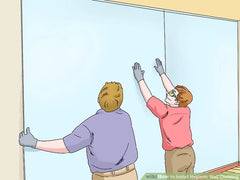
No — it’s one of the easier wall finishes to install. Cut with a fine-tooth saw or sharp utility knife, bond with the recommended adhesive, then finish with colour-matched trims and silicone. The lighter co-extruded sheet is especially easy to handle.
Not sure which to choose?
Order a sample of either option, or call our team on 01206 638495 — tell us the room and we’ll point you to the right specification.
Specifications correct at time of writing. Always check the current product page before ordering for a regulated environment.